
Year 6 · Selective School and Opportunity Class
Year 6 Mathematical reasoning practice for selective school tests
Year 6 candidates meet multi-step problems where the arithmetic is easy but the path is not. Speed comes from recognising the shape of a problem seen before, which is what a large bank of practice questions is for.
What the section covers
- Multi-step problems
- Several ordinary steps chained together, where one wrong turn early is fatal.
- Rates and proportion
- Speed, price per unit, recipes scaled up and down, best-value comparisons.
- Space and shape
- Area, volume, nets, symmetry and rotations described rather than drawn.
- Reasoning with data
- Drawing conclusions from a table or graph, and spotting what it does not show.
Sample questions
8 real questions from our Year 6 papers, covering the different ways this section asks things. Answer the ones you can click; the rest show how they work. Nothing to sign up for.
Question 1
What area of the island has both forest and lakes? Total area of the island: 200 km² Total area where there is forest (with or without lakes): 130 km² Total area where there are lakes (with or without forest): 90 km²
Lina maps an island showing areas that have only forest, only lakes, or both. These three categories cover the entire island.
.png)
Question 2
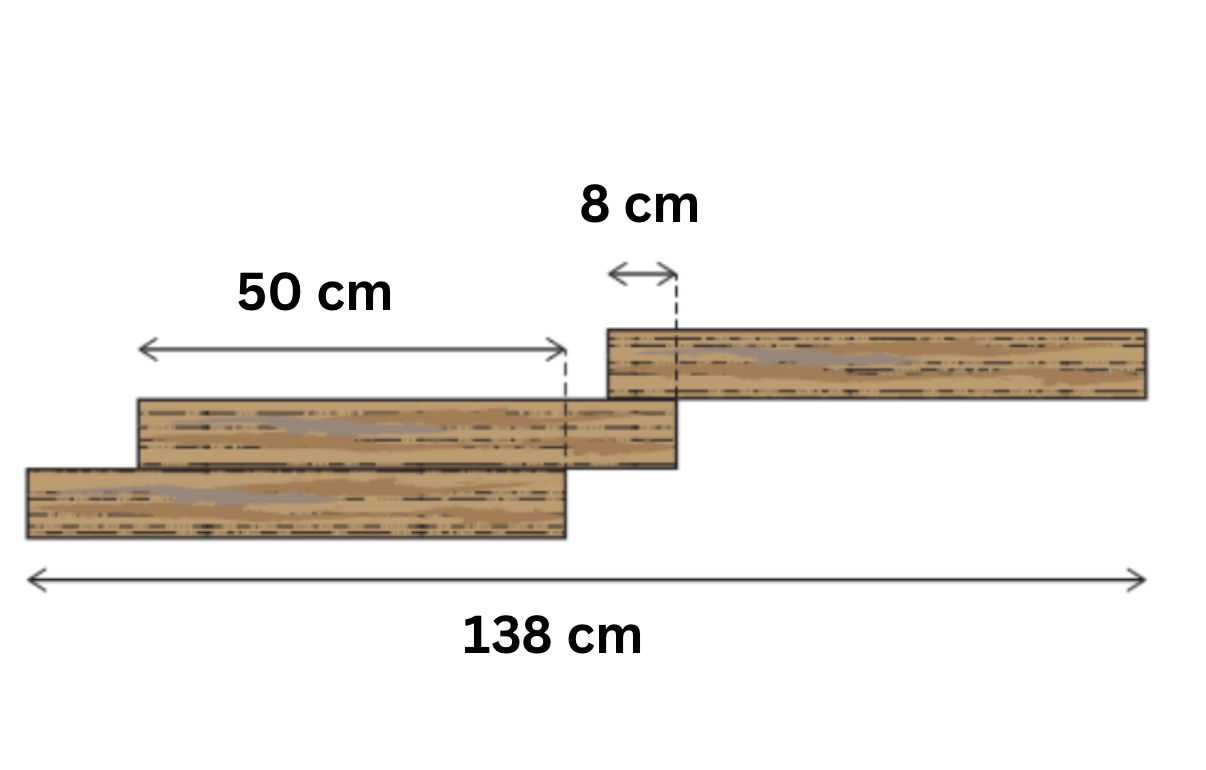
Three wooden planks are all the same length. They’re placed in a staircase pattern:
What is the length of one plank?
Question 3
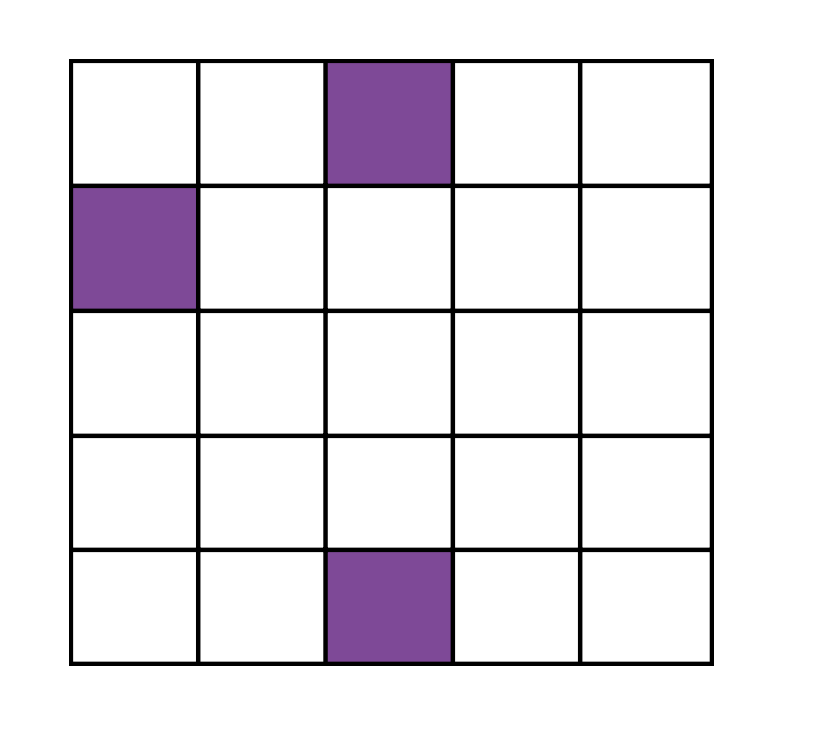
On a 5×5 grid, three small squares are already shaded:
You may shade more squares to make a pattern with exactly four lines of symmetry (both axes and both diagonals). What is the smallest number of extra squares you must shade?
Question 4
Anna has a square card measuring 24 cm by 24 cm. What is the greatest possible number of these trapeziums she can cut from the card?
Each right trapezium has parallel sides of 6 cm and 8 cm and a perpendicular height of 4 cm.
Question 5
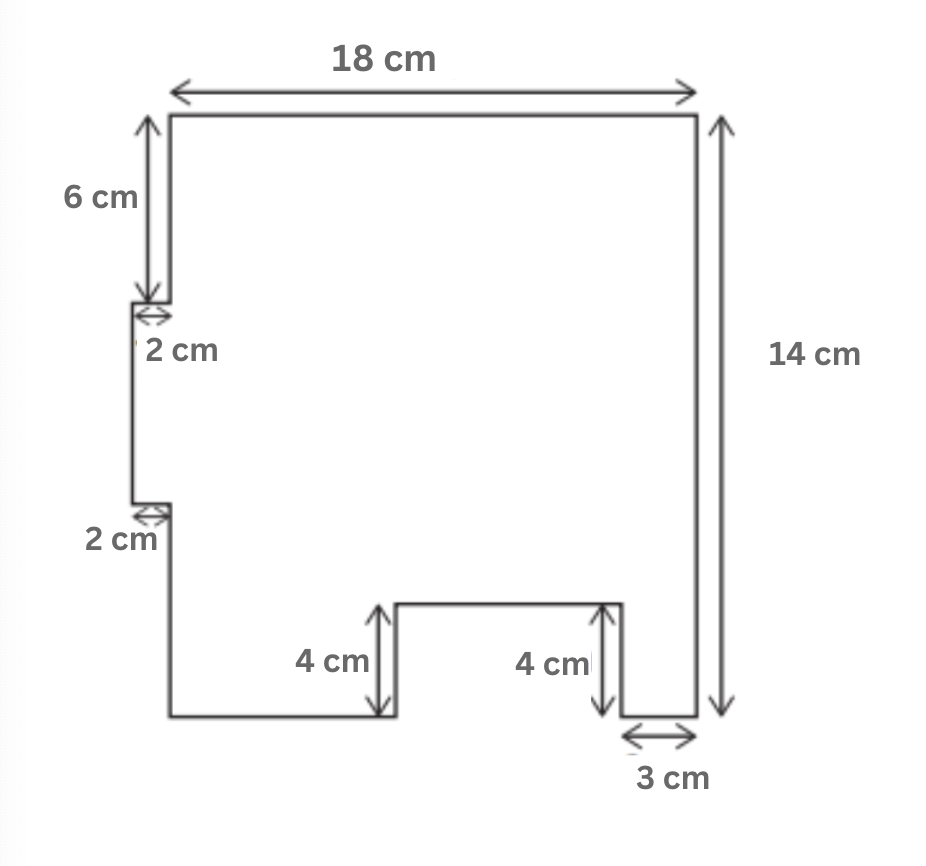
What is the perimeter of the shape?
The shape below is made from rectangles (diagram not to scale).
Question 6
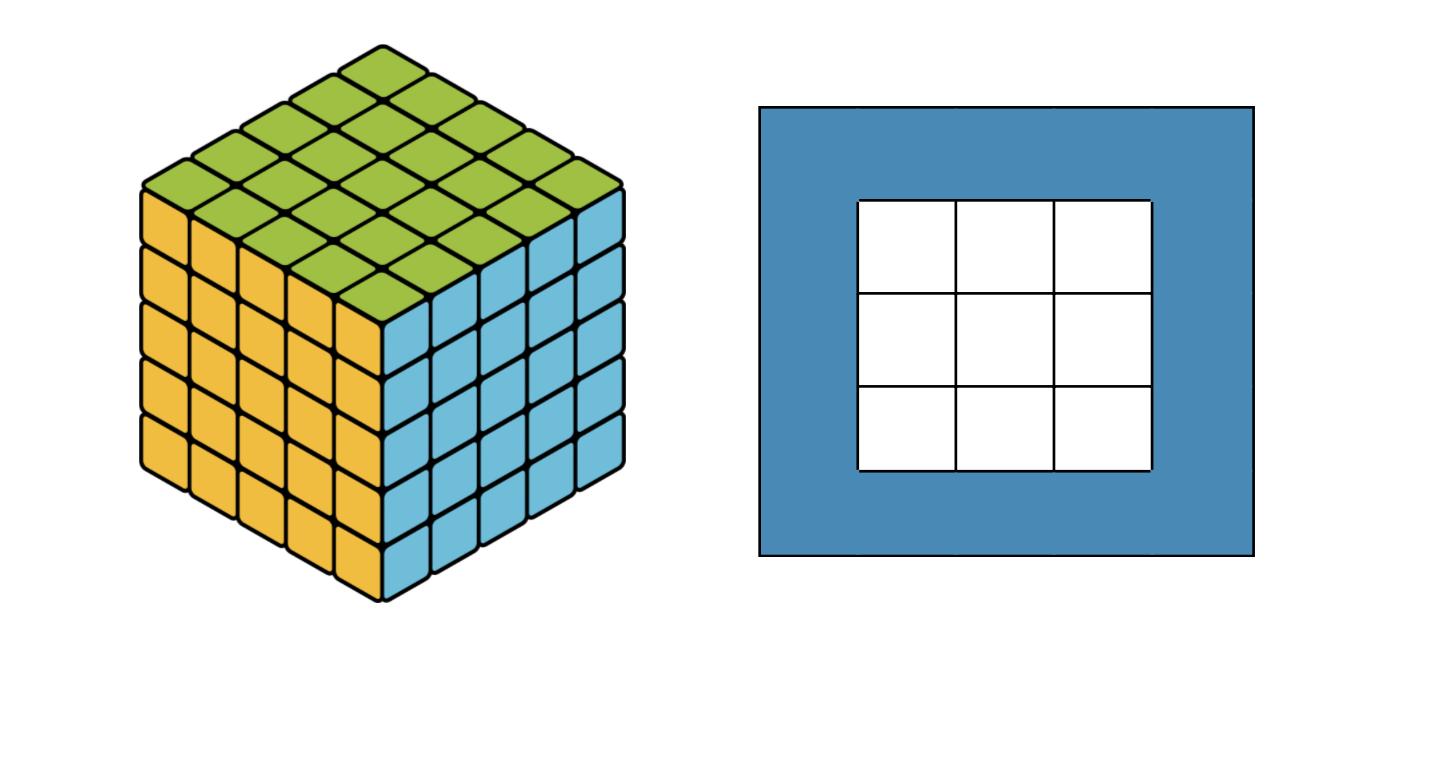
How many small cubes remain?
A large solid cube is built from 125 small cubes (so it’s 5 × 5 × 5). John removes some small cubes. He now sees this view when he looks at any of the six faces:
Question 7
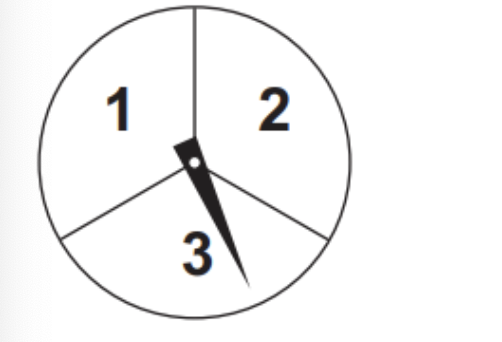
How many games does Alex win? During the 8 games: Alex spins two 1s, two 2s, and four 3s. Blake spins four 1s and four 2s (no 3s). There are no draws.
The higher number wins the game. They play 8 games.
Question 8
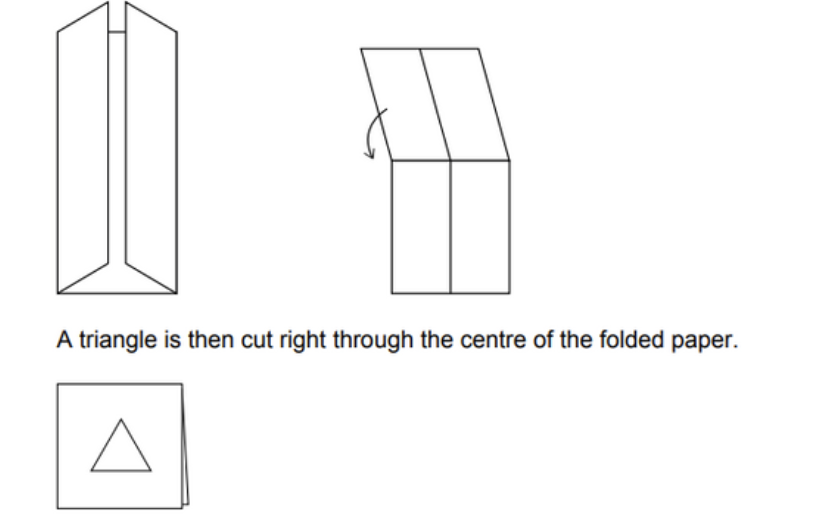
Which diagram matches the final sheet?
A square piece of paper is folded so that both edges meet in the middle, and then folded in half again, as shown above.
Keep going with the full papers
Twelve Year 6 papers, 389 questions.
Aussie Edu Hub is an independent educational practice platform and is not affiliated with ACARA or any state education authority. NAPLAN is a registered trademark of ACARA.